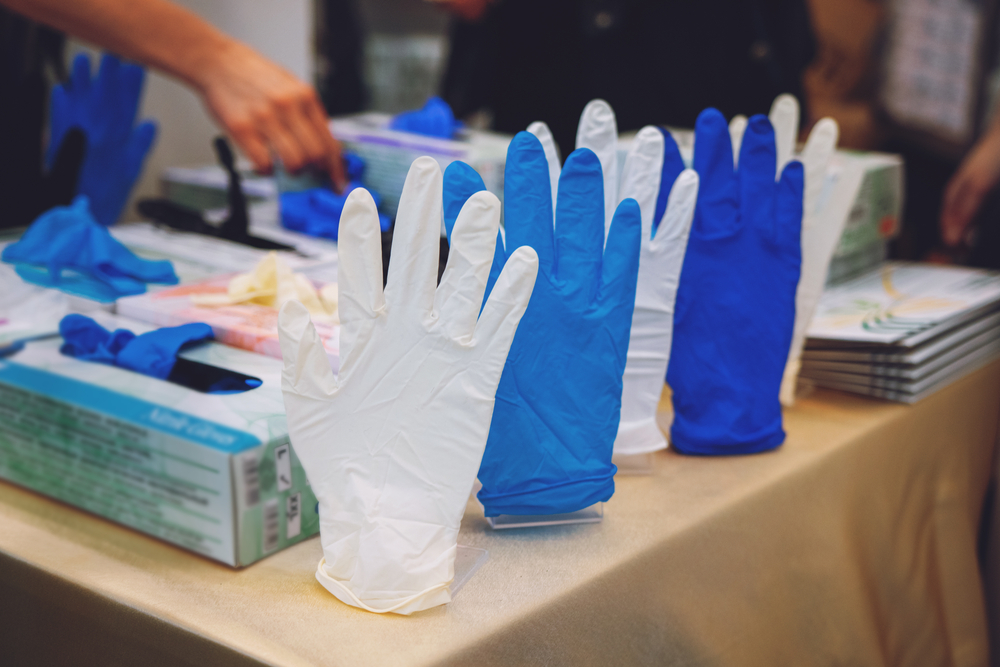
Disposable gloves are used across healthcare, care work, food handling, cleaning, tattooing, beauty, home care and many other day-to-day settings. The right choice depends on the task, the wearer, the material, the fit and any workplace requirements you need to follow.
At SHD Medical, we stock a practical range of nitrile gloves, latex gloves and vinyl gloves for personal and professional use. This guide explains the key differences, so you can compare your options more confidently before ordering.
Nitrile, latex and vinyl gloves may look similar at first glance, but they are made from different materials and suit different buying needs.
Some customers need a latex-free option. Some need a closer fit for more detailed work. Others want a cost-effective glove for short, lower-risk tasks. In workplaces, glove choice may also be shaped by internal policies, risk assessments or sector-specific guidance.
For healthcare and care settings, disposable gloves should be selected as part of the wider approach to personal protective equipment. NHS England’s standard infection control guidance makes clear that PPE use should be based on the task and the risk being assessed. In workplace settings, HSE guidance also highlights the importance of selecting gloves that are suitable for the substances and hazards involved.
Glove Type Material Common reasons to choose Considerations Nitrile Synthetic rubber Latex-free, close-fitting, durable, available in a choice of colours & sizes Often more expensive than basic vinyl gloves Latex Natural rubber latex Flexible, close-fitting, good touch sensitivity Not suitable for those with a latex allergy or sensitivity Vinyl PVC/Vinyl Latex-free, cost effective, suitable for short duration tasks Usually looser fitting
There is no single glove type that is right for every situation. The best option depends on what the glove is being used for, how long it will be worn, whether latex needs to be avoided, and what level of fit or feel is needed.
Nitrile gloves are made from synthetic rubber. They are a popular choice for customers who want a disposable glove that does not contain natural rubber latex.
They are available in a wide choice of colours, sizes, textures and powder-free options, which makes them a useful choice for many professional and personal settings.
Our nitrile glove range includes powder-free options from brands such as Aurelia, Unigloves, Bodyguards, Gloveman and Medline.
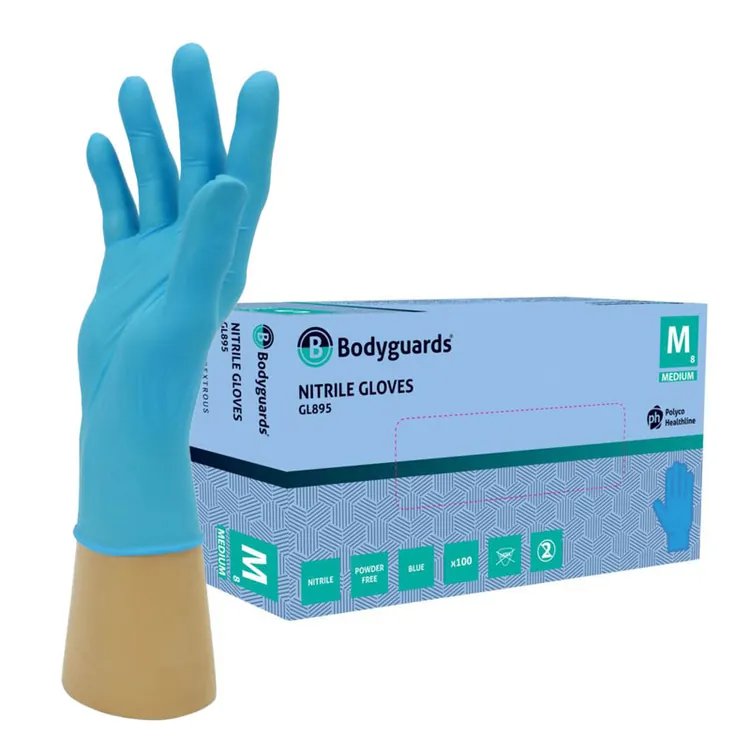
A good example is Bodyguards Blue Nitrile Gloves GL895, box of 100. These are nitrile, powder-free and latex-free, with textured fingertips and a beaded cuff. They have been tested in accordance withEN ISO 21420, EN ISO 374-1, EN ISO 374-4, EN ISO 374-5, AQL 1.5 and food food contact compliance.
Nitrile gloves are best suited to:
Benefits of nitrile gloves:
Latex gloves are made from natural rubber latex. They are often chosen for their close fit, flexibility and touch sensitivity.
The main consideration is latex allergy or sensitivity. Latex gloves are not suitable for people who need to avoid natural rubber latex. In workplaces, HSE advises choosing non-latex gloves unless there are no alternatives that provide the protection required. If a workplace assessment identifies latex as the most suitable glove type, HSE guidance says single-use latex gloves should be low-protein and powder-free.
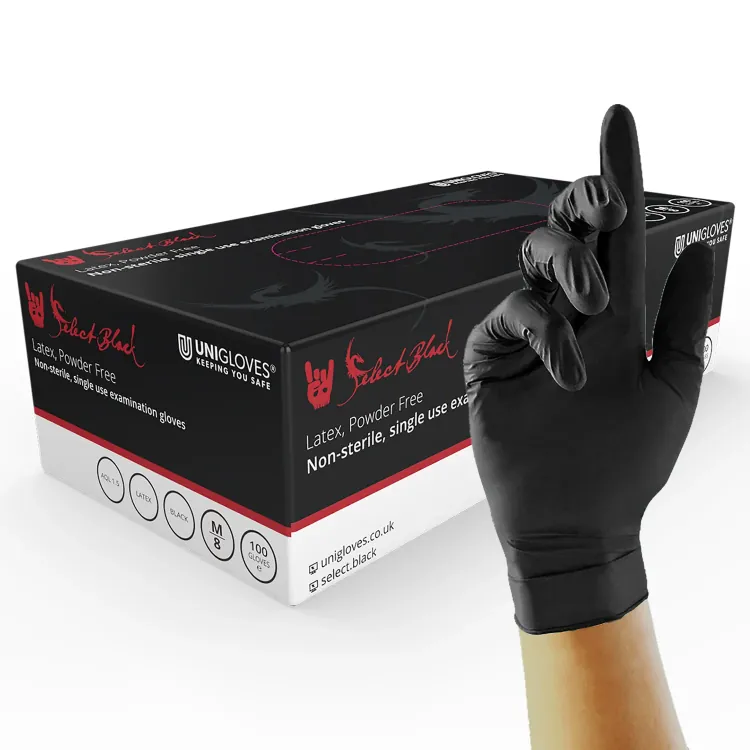
Example: Uniglove Select Black Latex Gloves, box of 100. These gloves are powder-free and touchscreen compatible, with a beaded cuff and microroughened external surface. They have a rating of AQL 1.5 and are listed as tested to EN374-1 Type B, with the manufacturer stating resistance to a range of chemicals.
Latex gloves are best suited to:
Benefits of latex gloves:
Vinyl gloves are usually chosen as a cost-effective, latex-free disposable glove. They tend to have a looser fit than nitrile or latex gloves, which can make them suitable for many short-duration, low-risk tasks.
They are a practical option where frequent glove changes are needed and where a close fit or high stretch is less important. Our vinyl glove category includes powder-free options from brands such as Gloveman, Unigloves, Aurelia, Shield and Yala, with features including powder-free, powdered, ambidextrous, and food-safe options.
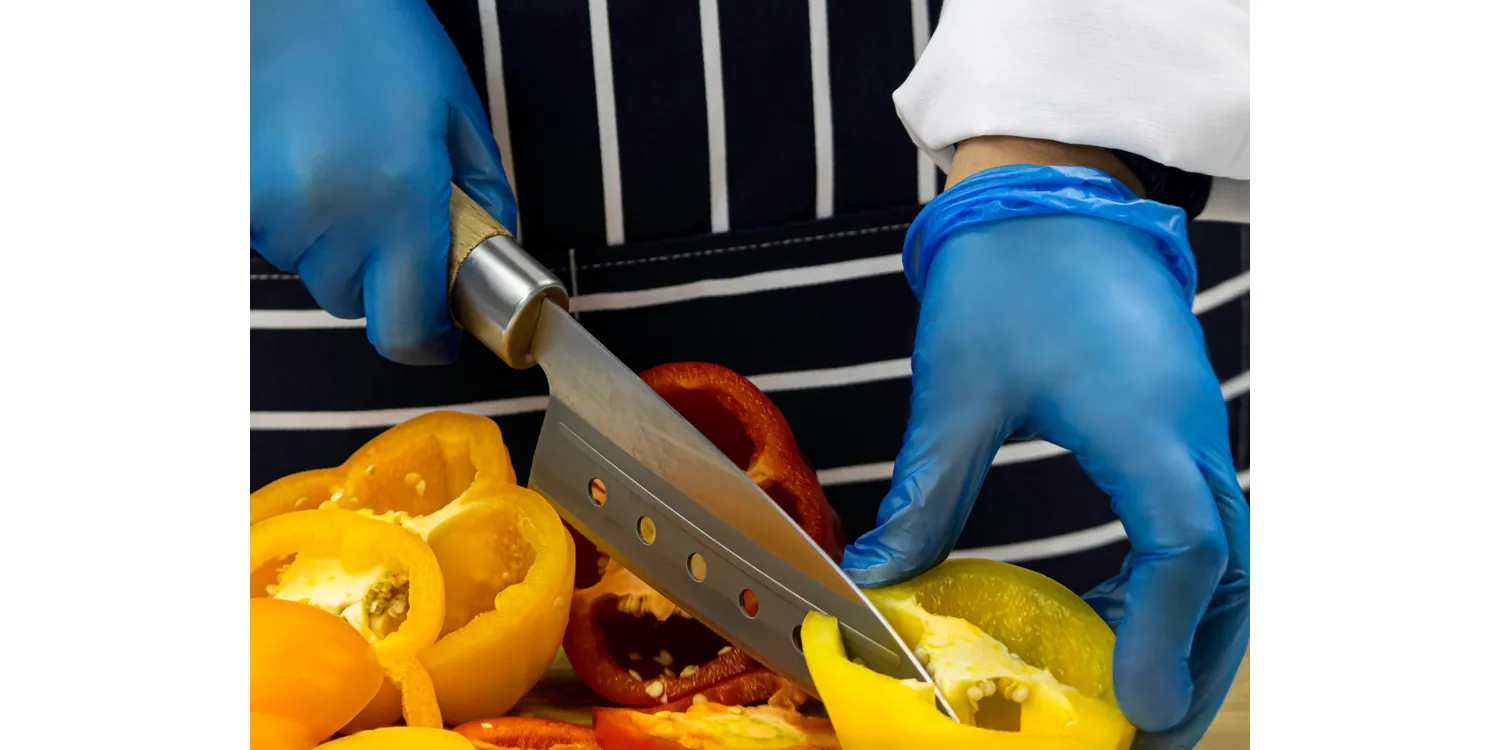
One example is Aurelia Delight Blue Powder-Free Vinyl Gloves. These gloves are latex-free and powder-free in a blue colour, with ratings including EN1186 approved for food contact, EN455 1-4, AQL 1.5, and available in a range of sizes.
Best suited to:
Benefits of vinyl gloves:
Disposable gloves may be powdered or powder-free. Powdered gloves are designed to be easier to put on and remove, but powder is not suitable for every setting.
Many buyers now prefer powder-free gloves, especially in care, hygiene, food handling and professional environments where residue, sensitivity or workplace policy may be a concern. HSE guidance specifically advises that if latex gloves are needed, they should be low-protein and powder-free. HSE also notes that powder from latex gloves can become airborne when gloves are removed, which may create a risk for sensitised people.
At SHD Medical, many nitrile, latex and vinyl options are available as powder-free gloves. When ordering for a workplace, care setting or shared environment, check your internal policy and the product specification before buying.
Always check the product page carefully to confirm the standards, size and specification you need before ordering.
Before choosing between nitrile, latex and vinyl gloves, work through these key points.
Choose a clearly listed latex-free glove if:
Nitrile and vinyl are common latex-free options, but always check the product page before ordering.
Different tasks need different glove features.
For care, healthcare or workplace use: follow relevant guidance, risk assessments and local policy.
A good fit helps with comfort and control.
Colour can be useful for stock control, task separation or workplace preference.
Before placing an order, review the product details carefully.
Look for:
For professional, care or healthcare use, glove selection should also fit any relevant workplace policy, risk assessment or official guidance.
Nitrile, latex and vinyl gloves each have a place. Nitrile is a strong all-round latex-free option. Latex offers flexibility and close fit, but is not suitable for people who need to avoid natural rubber latex. Vinyl is a cost-effective latex-free choice for many short, lower-risk tasks.
The right disposable glove is the one that fits the task, the wearer and any relevant workplace requirements. Before ordering, check the material, size, powder status, texture, standards and product details carefully.
You can browse our full disposable glove range at SHD Medical here.
This guide is general information only. It does not replace product instructions, workplace policy, clinician advice or official NHS, HSE or GOV.UK guidance where relevant.
Sources: https://www.hse.gov.uk/mvr/topics/gloves.htm
https://www.england.nhs.uk/national-infection-prevention-and-control-manual-nipcm-for-england/chapter-1-standard-infection-control-precautions-sicps/